Tools I like to use for making images
I now exclusively use a large format film camera to make my images but before that I used a digital SLR. I started with a Nikon D7000 with a 16 megapixel cropped sensor until it stopped working and I replaced it with the D7100 with a 24 megapixel cropped sensor. I used a nice 24-120mm lens on both cameras that suited my needs well. I did have a several prime lenses but there seemed to be little need to use them over the zoom lenses. About 50% of my images were made with my digital camera.
On a whim I brought an Arca Swiss model B field camera from a market stall with normal and wide angle lenses. The camera used 4x5" large format film that at the time was relatively cheap. My early results using that system were not great, I never felt completely happy that I was achieving fine focus, this was probably due to poor lenses.
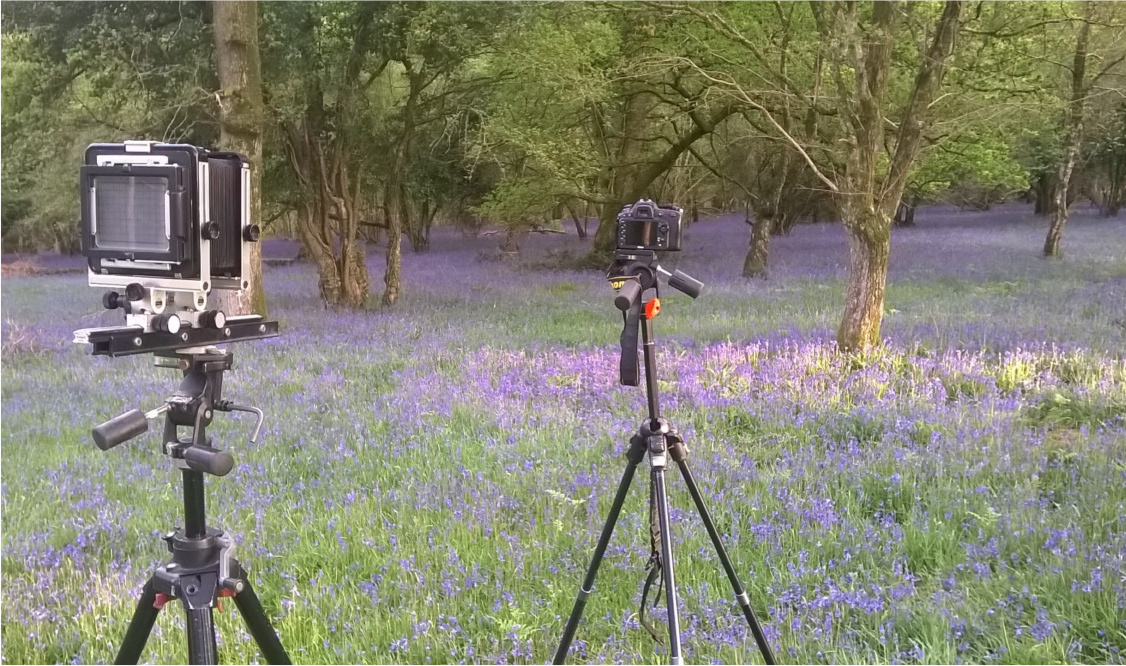
My Nikon D7100 alongside my Arca Swiss large format camera.
Eventually I replaced my Arca Swiss with a Sinar P2 studio camera and also better lenses. This made a massive difference to my confidence when using a large format camera. Everything could be precisely aligned and focused and the improved lenses produced sharper images across the sheets of film.
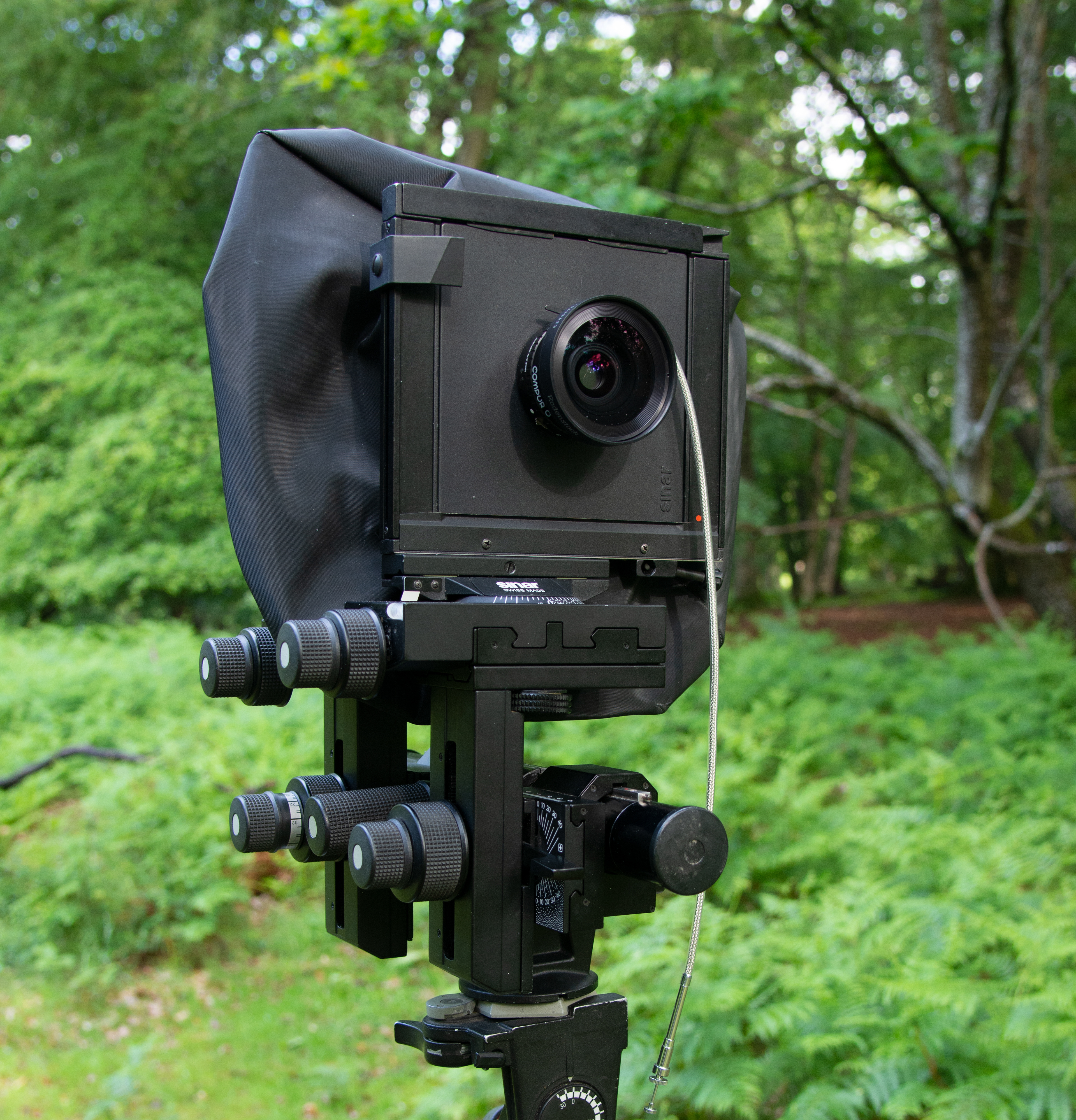
Sinar P2 Large format camera
Unfortunately both the Arca Swiss and Sinar P2 were bulky and heavy and even though the New Forest is relatively flat it was regularly testing the limits of my fitness. The Sinar P2 was never intended as a field camera and once you account for the weight of the backpack, lenses, film and tripod I was carrying about 20kg of equipment. With this in mind I decided to replace my Sinar P2 with a dedicated light weight field camera. I selected a Chamonix 45-F2. This has fortunately reduced my total carrying weight in half and doesn't feel any less precise than the Sinar P2.
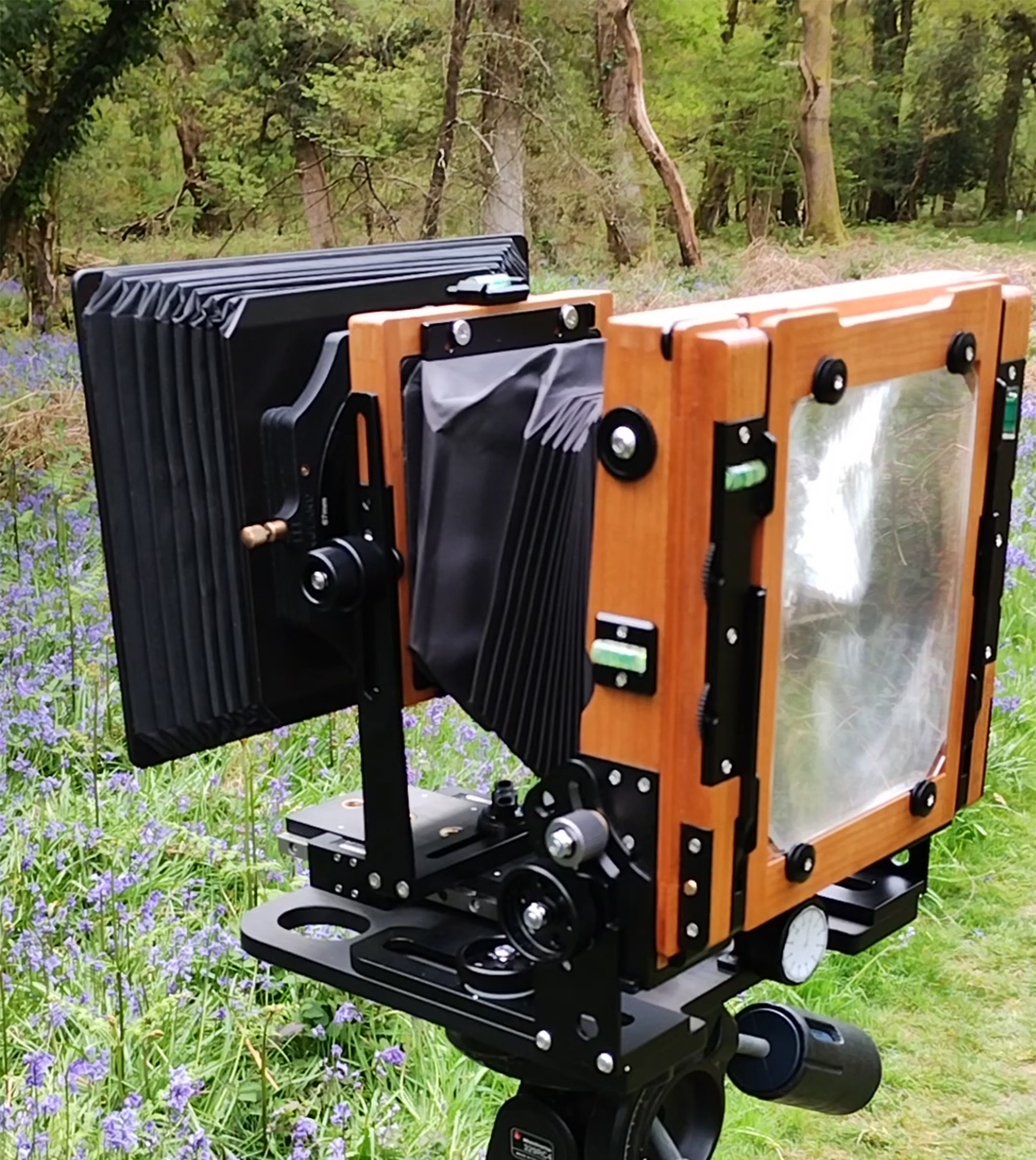
Chamonix 45-F2
One of my most important pieces of equipment is a simple view finder that allows me to quickly frame and compose an image without even having to setup my camera. I use a plastic device called a view catcher although cutting out a cardboard rectangle would do just as well. The advantage of the view catcher is that it enables me to change the aspect ratio. This is especially useful when it comes to using a large format camera as the image projected on the ground glass is upside down and back to front. I also have a linhof optical viewfinder that simulates the use of different focal lengths so that I know which prime lenses I need to use when setting up my camera for an image.
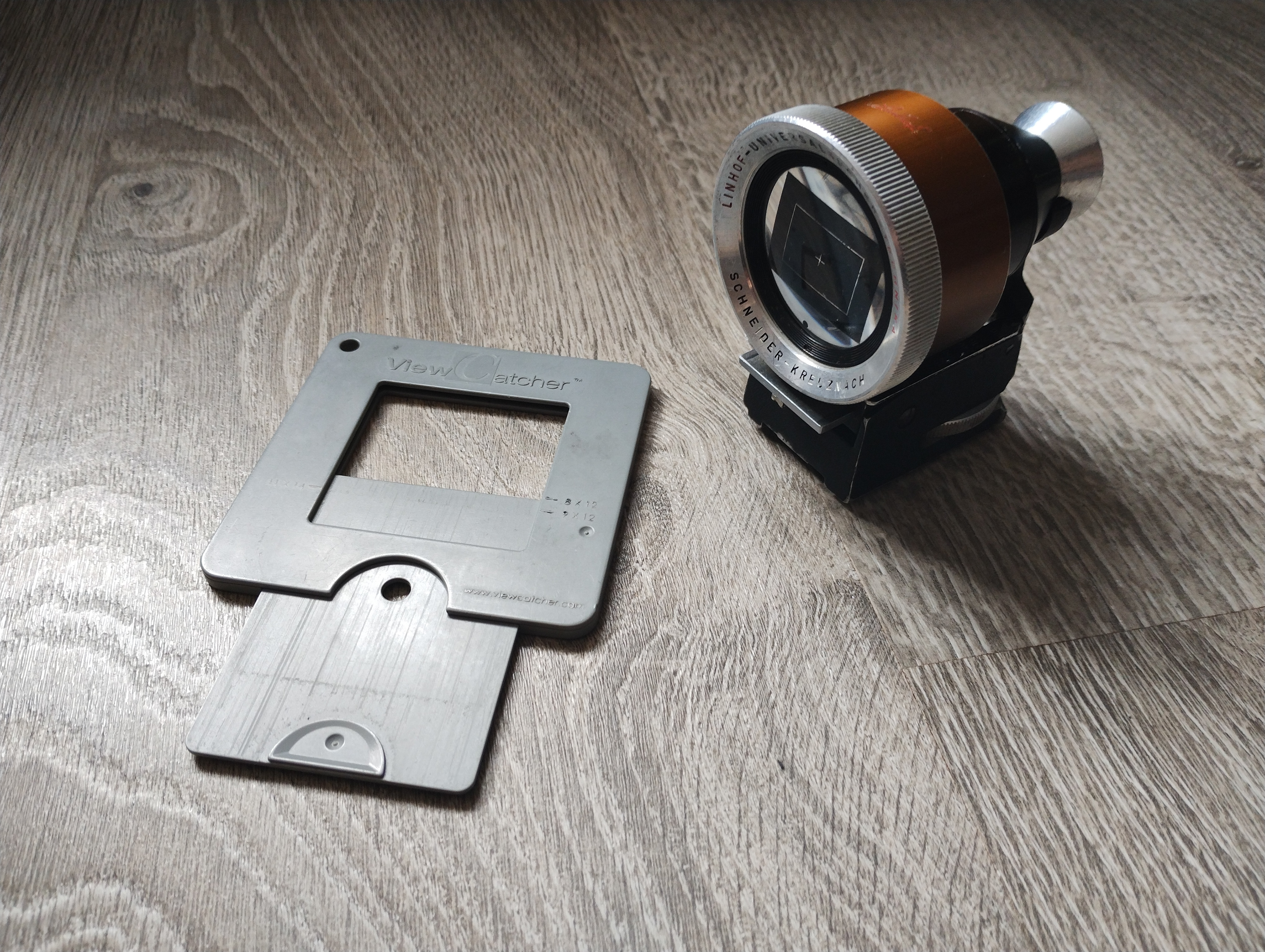
View Catcher and Linhof optical viewfinder